“Oh, my dear little librarian, you pile up enough tomorrows, and you’ll find you’ve collected nothing but a lot of empty yesterdays. I don’t know about you, but I’d like to make today worth remembering.”
—Harold Hill, The Music Man
That line has followed me for years. Maybe because it names a truth I’ve learned slowly: I spent so much of my life leaning forward — toward the next milestone, the next season, the next version of myself — convinced the future would be sweeter than whatever moment I was standing in. Only later did I realize how many of those moments were already the “good ol’ days.” I just didn’t know it yet.
When I was younger, all I wanted was to be a grown up. Childhood felt like a waiting room. You had to go to school, you had to live at home, you had to follow the rules. I was ready for adulthood — for a job, freedom, marriage, children, the whole picture.
I remember telling my mom how excited I was to go to college and then graduate and finally start my life. She laughed gently and said, “Oh, I wish I could go back to college. It was such a simple time — all you had to do was go to class, get good grades, and hang out with friends.” I remember thinking she was wrong. College was just another stepping stone. I wanted the next thing.
And then the next thing came. And suddenly, all I wanted was to go back and relive those years with a different mindset — one that understood how sweet they really were. I didn’t know it then, but that longing to grow up was the first sign of a habit I’d carry with me for years — always looking ahead, rarely pausing long enough to see what was already good. College would teach me that again, in a way I didn’t expect.
A few days ago, I was running errands in the kind of Texas heat that makes you question every life choice that led you to being outside. I turned on an old playlist from college — one I hadn’t listened to in years. When the opening lines of “Car Crash” by Matt Nathanson came through the speakers, I was instantly transported.
It was my junior year. I transferred schools, but on my last Saturday before I moved out of my old college, one of my best friends asked if I wanted to go for a walk. We wandered for hours through the neighborhood across from campus, talking about everything — our friendship, our other friends, boys, our future, the whole hopeful tangle of being twenty.
We synced our iPods, each keeping one earbud in as we walked. “Car Crash” was the first song we listened to. I can still feel that moment: the sun just beginning to rise, the quiet streets, the warmth of having someone beside me who understood me so well. I remember thinking life couldn’t possibly get sweeter. I didn’t want anything more than what I had right then.
That sunrise walk stayed with me, not because anything dramatic happened, but because it showed me how sweet a moment can be when you’re actually inside it. And it wasn’t the only place I learned that lesson. Long before college, and long after, Cape Cod had been quietly teaching me the same thing.
When I was a kid, my family spent three weeks every summer on Cape Cod. It was a tradition — half the time with my mom’s parents and sister in the Boston area, and the other half at my grandmother’s house on the Cape. At the time, I didn’t appreciate the Cape much. Being at my aunt and uncle’s house meant playing with my little cousins, having slumber parties, swimming in their pool. It was loud and fun and full of people. I never wanted it to end.
The Cape, by comparison, felt quiet. Too quiet. It was just my parents, my brother, and my grandmother. No pool, no cousins, no chaos. I didn’t understand why it mattered.
Then came the summer when my grandmother wasn’t well enough to make the trip. She split her time between her Cape house and her home in a retirement community in Florida. Without her there, the Cape house felt strange and empty. I hated it. I wished I’d been more grateful for the years I’d had her there.
The following year, she wasn’t there because she had passed away six months earlier. I was grateful for the buffer year — the year when she wasn’t there but was still alive. It softened the blow. But it also made me realize how much I had taken for granted.
After that, something shifted. I began to treasure my time on the Cape. We now spent all three weeks there, with occasional trips into Boston or visits from family. The house didn’t have a TV and had terrible cell reception, which meant it was a forced break from the internet — a gift I didn’t recognize until adulthood. Mornings were slow. I biked twenty miles most mornings on the 22‑mile Rail Trail. We played games, read books, sat on the porch, and talked.
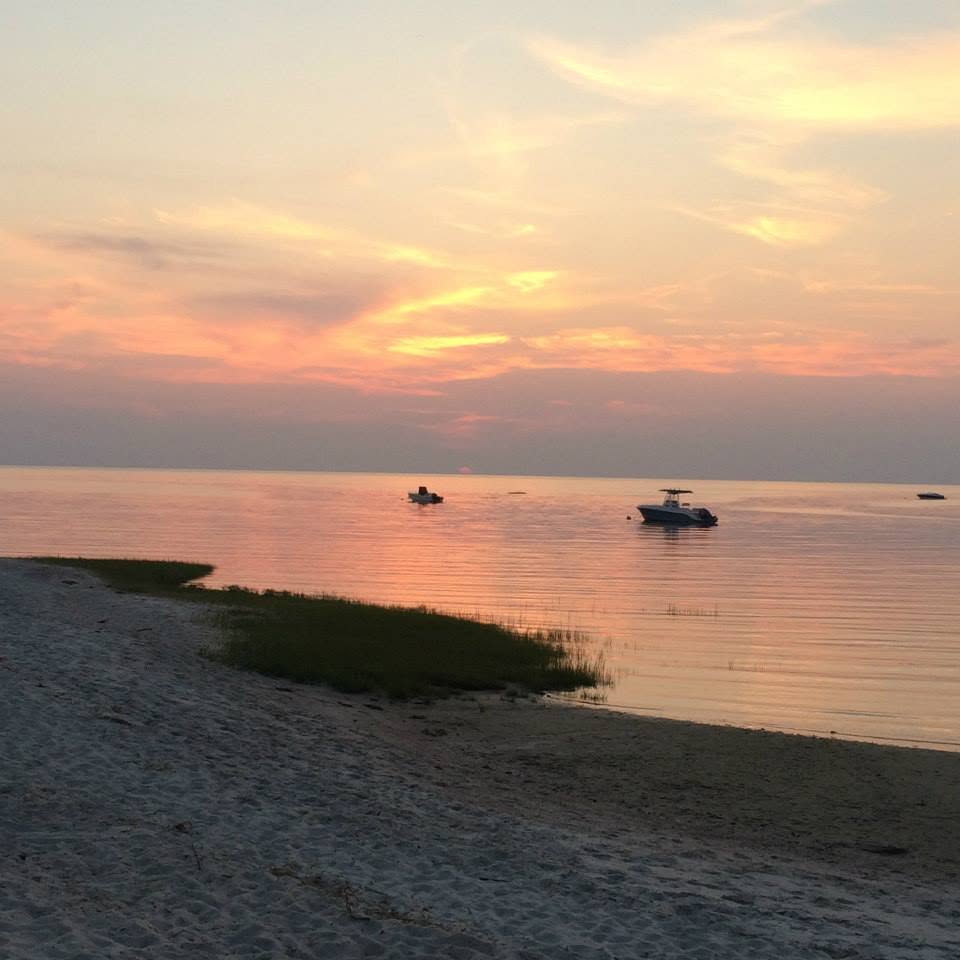
And the best parts of the Cape were the ones stitched into the fabric of our summers: afternoons at First Encounter Beach on the bay side, wading through warm, shallow water searching for hermit crabs; the ocean side at Coast Guard Beach, where we’d ride in the freezing cold waves on boogie boards until our arms were tired; takeout from Arnold’s — fried clams, onion rings, and lobster rolls — eaten on the porch with ice cream from Cape Cod Creamery for dessert; shopping in downtown Chatham with my mom, starting the day with breakfast at Hangar B and then wandering in and out of little boutiques in the salty sea air; and movie nights at the Wellfleet drive‑in, curled up together in my dad’s Prius as the screen lit up the summer sky. It was simple. It was peaceful. It was everything I didn’t know I needed.
But then came the day I got married — a marriage that later ended — and spending three full weeks on the Cape wasn’t possible anymore. Life had shifted. Responsibilities had multiplied. Vacations had to be negotiated.
Then came the day we sold the house — the last summer my brother ever spent on the Cape.
The following year, my parents took a trip to Europe. The summer after that, my brother was sick in the hospital, and we didn’t make any trips at all. That was the year he passed away.
The next summer, we went back to the Cape as a family — renting a place instead of staying in the house that was no longer ours. It was different, quieter, tender in a way I didn’t expect. And that was the last time I was there. Not because it’s too painful, but because life shifted again. Without my brother in it, my parents often go as a couple now, the way they did before we were born. And the Cape became something I carry more in memory than in routine.
I didn’t realize those quiet Cape mornings — and all those little rituals — were becoming the memories I’d hold onto the tightest.
Lately, I’ve been thinking about how often we live in anticipation. We wait for the next milestone, the next season, the next break, the next chapter. We pile up tomorrows like Harold Hill warned, assuming they’ll be better, fuller, sweeter.
But what if the sweetness is already here?
What if these are the days I’ll ache to return to someday?
The quiet mornings with my coffee.
The evenings cooking dinner with my fiancé.
The texts from friends that make me laugh.
The small routines that feel ordinary now but will someday feel sacred.
The errands in the heat with old playlists that time‑travel me.
The moments of stillness that I rush past because I’m already thinking about what’s next.
I think about my younger self — the one who wanted to grow up so badly — and I want to tell her that adulthood is beautiful, but not because it’s free. It’s beautiful because it’s full of tiny, fleeting moments that become the memories you carry with you.
I don’t know what tomorrow will look like or how the shape of my life will keep changing. But I do know this: it’s far too easy to miss the sweetness of the season you’re already in. We rush, we anticipate, we assume the next chapter will be better. And meanwhile, the moments we’ll someday ache for are happening quietly around us — in the routines we barely notice, the conversations we take for granted, the ordinary days we move through on autopilot.
If there’s anything I hope you carry with you, it’s this: the good ol’ days aren’t waiting somewhere down the road. They’re here. They’re now. They’re tucked into the small, unremarkable moments that won’t feel remarkable until they’re gone. Notice them. Honor them. Let them matter while you’re still living them.

